
Gastric adenocarcinoma is the most common form of stomach cancer, distinct from lymphomas and carcinoids which are classified by their respective histological types found in other body regions.
Historically, gastric cancer was the leading cause of cancer-related death globally in the 20th century. It now ranks second, after lung cancer.
It is the fourth most prevalent cancer worldwide, with incidence rates declining in Western countries, likely due to advancements in diet and lifestyle.
In Iran, gastric cancer is the most common gastrointestinal cancer and the most frequently diagnosed cancer among men.
Risk factors for gastric cancer are broadly categorized into modifiable and non-modifiable.
Unchangeable Risk Factors

- Race: East Asian and Pacific populations exhibit higher susceptibility.
- Age: A significant factor, with 90% of cases occurring in individuals over 45.
- Family History: Increases risk by 2-4 times if close family members have had stomach cancer.
- Male Sex: Men face a 2-5 times higher risk.
- Genetics: Syndromes such as Lynch syndrome, FAP, Peutz-Jeghers syndrome, and Li-Fraumeni syndrome are associated with elevated risk.
Changeable and Modifiable Factors
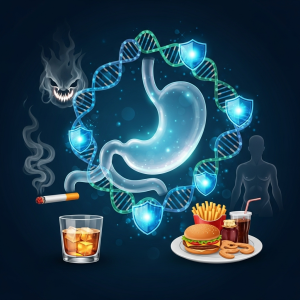
- Helicobacter pylori Infection: The most common modifiable factor, particularly linked to lower stomach cancer. While prevalent globally, it significantly increases risk without always leading to cancer.
- Epstein-Barr Virus (EBV): Detected in approximately 16% of stomach cancer cases, suggesting an association with certain types.
- Smoking: Elevates the risk for both upper and lower stomach cancer.
- Obesity: A BMI over 30 increases the risk of mid and lower stomach cancer.
- Diet: High red meat consumption has been linked to increased risk, while increased fruit and vegetable intake may decrease it.
Screening
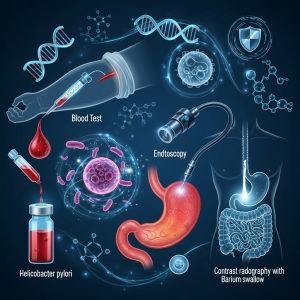
In high-incidence areas like Japan, screening involves H. pylori blood tests, endoscopy, and radiography with contrast media.
Pattern of Spread
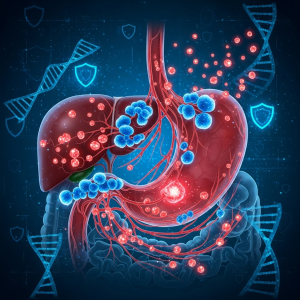
Stomach cancer originates from structural changes and excessive growth of gastric mucosal cells. It can spread through direct invasion of the stomach wall, or via lymphatic and blood systems, potentially affecting organs such as the intestines, pancreas, peritoneum, and liver.
Symptoms
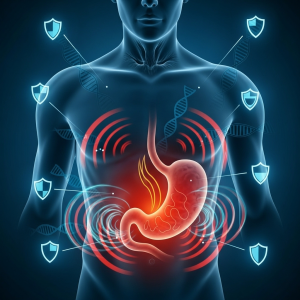
Common symptoms include loss of appetite, early satiety, abdominal discomfort, unintentional weight loss, difficulty swallowing (dysphagia), weakness due to anemia, nausea, vomiting, and tarry stools (indicating internal bleeding). In some instances, an abdominal mass, enlarged lymph nodes due to cancer spread, or an enlarged liver may be palpable.
Diagnosis
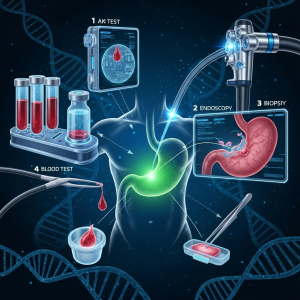
Initial diagnosis typically involves endoscopy and biopsy of the gastric mucosa. Following histological confirmation, comprehensive staging is performed using endoscopic ultrasound, CT scans, and sometimes MRI (for suspected liver involvement).
Prognosis
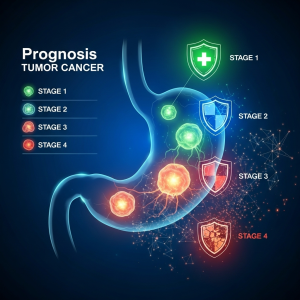
Prognosis is highly dependent on the stage of diagnosis. Unfortunately, advanced stomach cancer carries a poor prognosis, is difficult to treat, and recurrence after treatment is common. Co-existing diseases, higher disease stage, abnormal blood tests, and certain genetic disorders worsen the prognosis.
Treatment
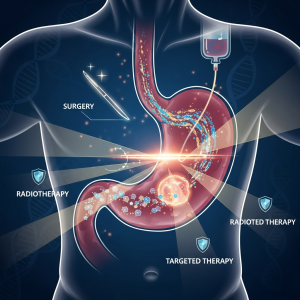
The primary treatment opportunity is complete surgical removal of the tumor, surrounding tissue, and lymph nodes. Adjuvant chemotherapy and radiation therapy are employed to maximize cancer cell eradication. For advanced and widespread cases, chemotherapy, radiation therapy, and sometimes palliative surgeries are utilized to manage symptoms and provide relief.
References
Devita, Hellman, and Rosenberg’s CANCER
Perez and Brady’s Radiation oncology
Digestive Diseases Research Institute (DDRI)
Comments