
The Common Cancer with a Vaccine!
Over the past 80 years, in developed countries, the incidence of advanced cervical cancer and its associated morbidity and mortality have significantly decreased. This is attributed to effective screening and treatment of pre-cancerous lesions. However, worldwide, cervical cancer remains one of the most prevalent cancers and the fourth most common cancer in women. Due to a lack of screening and a high prevalence of HIV, the highest incidence is in Africa, but due to the widespread HPV virus, it is also common in other parts of the world, especially in developing countries.
HPV Virus
More than 90% of cervical cancer cases are linked to the presence of Human Papillomavirus (HPV), which is transmitted through sexual contact. Infection with this virus is highly prevalent globally. In most individuals, this infection clears within two years, but in about 15% of affected women, it persists and causes cellular changes leading to pre-cancerous lesions and then cancer. This virus also causes asymptomatic infection in men, which can lead to its transmission to women, or sometimes genital cancerous lesions in men.
It typically takes 10 to 20 years from the time of exposure to the virus until the development of cancer.
Risk factors for cervical cancer are the same as risk factors for HPV infection, including:
⁃ Early age of sexual debut (under 16 years)
⁃ Multiple sexual partners throughout life
⁃ Having a spouse/partner with a history of multiple partners
⁃ History of other sexually transmitted infections such as gonorrhea, genital herpes, and HIV
Other risk factors include smoking and exposure to carcinogens.

Vaccine
The quadrivalent HPV vaccine (against four different strains of the virus) was approved by the FDA in 2006, and since then, in developed countries, all girls and boys aged 9 to 26 years are vaccinated. Despite the significant importance of this vaccine in preventing HPV infection and related cancers (genital and oral/pharyngeal), unfortunately, due to issues related to cost and access, vaccination is not yet common worldwide. To date, HPV vaccine has been included in the national immunization programs of 64 countries.
(Unfortunately, in our country, HPV vaccination is not yet part of the national program, but it can be purchased from pharmacies and reputable centers.)

Screening
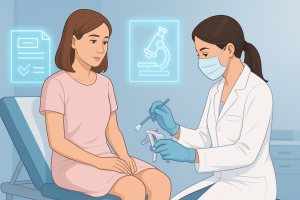
Given that cervical cancer always starts with pre-cancerous lesions and has a long pre-cancerous period before the rapid growth phase, it is recommended that all women (regardless of sexual activity) begin screening at age 21 with a Pap smear (sample from cervical secretions) every 2-3 years at gynecology and midwifery clinics. If screenings are normal, after consultation with a physician, the intervals can be increased after age 30 and finally stopped at age 65.
Clinical Symptoms
In addition to diagnosis during screening; symptoms of cervical cancer in women who are not screened can include abnormal bleeding or changes in the amount and frequency of menstrual bleeding, fatigue, discharge, dysuria, pelvic pain, and if other body parts are involved, abdominal symptoms and leg swelling.
Diagnosis
Diagnosis of the disease involves examination and biopsy, followed by imaging to determine the extent of involvement.
Treatment
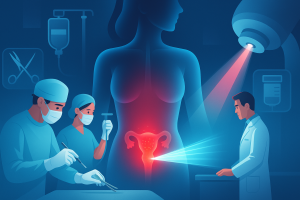
In the early stages of the disease, it is eradicated with surgery or radiotherapy (with or without concomitant chemotherapy). In more advanced cases, various combined treatments are used to control the disease.
The more advanced the disease, the more difficult definitive treatment becomes.
In widespread cases, the goal of treatment is to control tumor spread and increase patient survival.
Dr. Mansoureh Dehghani
With notes from:
Perez and Brady’s Radiation Oncology
Comments